Straying stock and fences beside public roads in NSW
If stock get out of a paddock and onto a public road, the NSW Police page we read says owners are responsible for making sure their stock do not stray there. That is the starting point for any fence beside a road, a stock route or Crown land. The sources are clear about the owner's responsibility for stock and much less clear about who fences a public boundary. This page sets out both, so you can ask the right agency the right question.
It is not legal advice. We are a referral service, and the councils and agencies named below are the authority on their own rules.
Straying stock: who is responsible
NSW Police say stray stock that contribute to a crash may bring a criminal charge against the person responsible. Its page speaks of responsibility for stock and does not mention fences (NSW Police straying stock page). The NSW Government page on moving livestock on public roads adds that drovers must do what is practicable to stop stock becoming a hazard to people, animals or vehicles on the road. It says that drovers on a travelling stock reserve must fence stock off the road between sunset and sunrise, and that landholders can be fined under the Public Spaces (Unattended Property) Act if stock are left unattended in public. It also carries a public liability requirement for drovers, which you should read on the page (NSW Government page).
Put together, the owner is responsible for the stock. A fence is one way to meet that, but the pages we read set no fence standard beside a road. Ask the council what it expects.
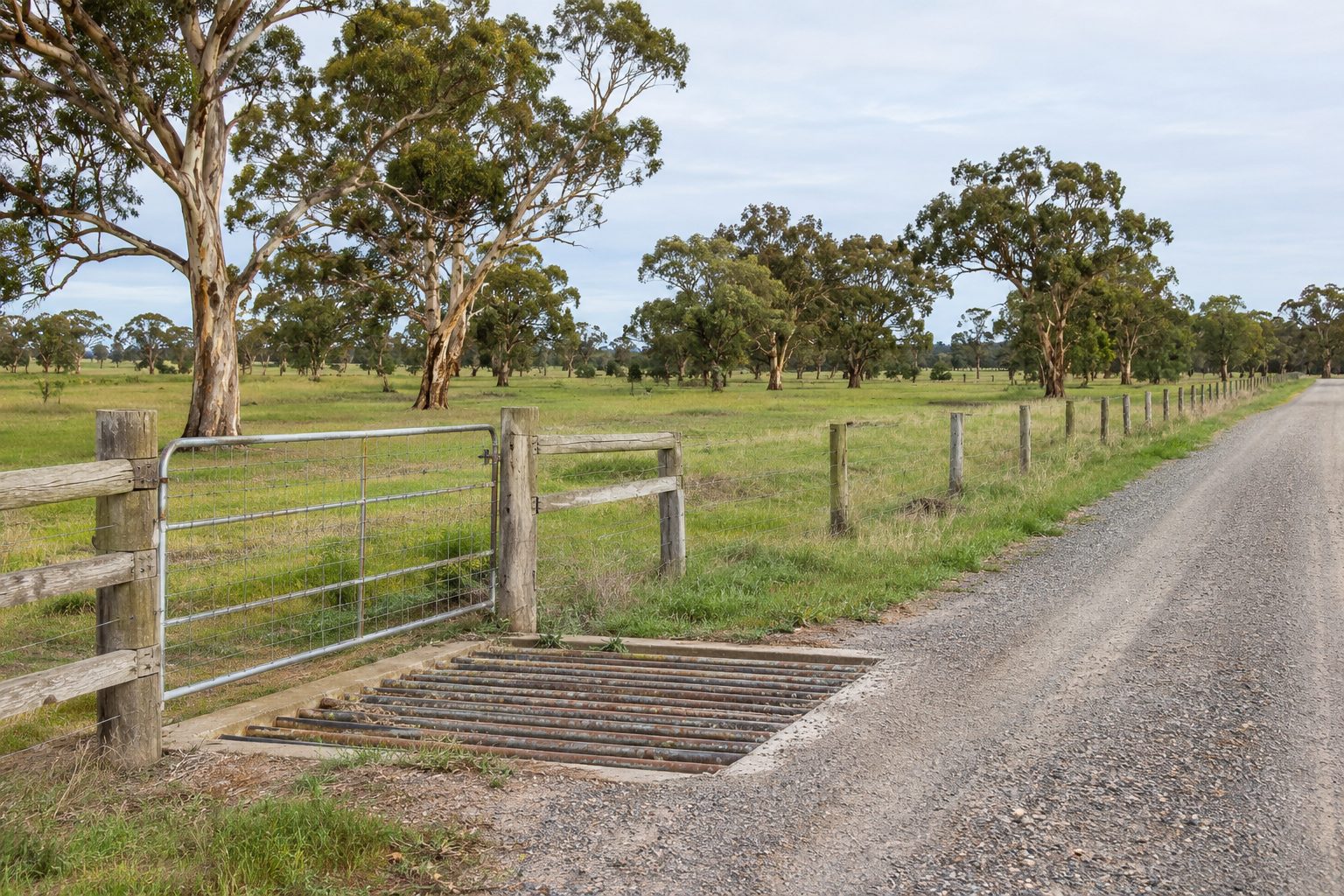
Roadside grazing permits and council rules
Some councils publish their own rules. Three that we read say different things, and none is a rule for your council.
| Council | What the page says | Note |
|---|---|---|
| Snowy Valleys | Owners remain responsible for their stock at all times. Roadside grazing needs council authorisation and a Local Land Services permit (council livestock page). | We give no fine amount |
| Edward River | A policy under which Local Land Services issues permits with council concurrence, for up to seven days, supervised, sunrise to sunset. No fencing requirement is stated (council policy). | Version 2 dated 8 October 2018: check the current policy |
| Junee | The council describes its road authority role as reaching the boundary fences on both sides of the road (council page). | Ask what that means for the fence |
The Edward River point is worth a note. A policy that states no fencing requirement is not saying that no fence is needed, and a policy dated several years ago may have been replaced. Ask the council for the current one. On the Junee wording, the council's road authority role reaches the boundary fences, which suggests the road reserve reaches the fence line. Whether that makes the council responsible for the fence is not said, so ask.
Travelling stock reserves
A travelling stock reserve is Crown land set aside for moving, resting and grazing stock. The NSW Government says there are about 2 million ha in NSW, and Local Land Services manages about 578,000 ha of it, about 30 per cent. Some activities on a reserve need a permit (NSW Government reserves page). The users handbook says permits can be cancelled or suspended and that management includes maintaining fences (users handbook). Crown Lands NSW also publishes a page on reserves (Crown Lands page).
Travelling stock may move along a reserve beside your fence. The drover duty on the NSW Government page is about keeping stock off the road at night, and it does not say who protects a neighbouring fence. If a reserve runs beside your land, keep dated photos of the fence line and keep any letters or permits from Local Land Services.
The reserve pages are silent on one key point: who fences the boundary between a reserve and your land. We looked and found no answer, so we do not give one.
Who fences a reserve or Crown land boundary
This is unsettled in what we read. The Dividing Fences Act shares the cost of fences between adjoining owners, and the dividing fences guide explains it. Whether it applies to a boundary with Crown land or a reserve is not confirmed here, and we state nothing either way. Ask Local Land Services and the council before you build or replace such a fence, and before you serve any notice. The farm boundary fencing page covers boundaries with a private neighbour.
If the fence is beside a road, it is also worth asking whether the council has a view on gates, grids and signs. For a stock fence, the sheep and cattle fencing page covers fence types.
What to ask the council and Local Land Services
- Who is the road authority for the road beside the fence, and does it reach the fence line?
- Is a roadside grazing permit needed, and which policy is current?
- Who maintains the fence beside a reserve or Crown land?
- Does the reserve have a permit, a lease or a grazing arrangement that affects the fence?
- Who should be told before the fence is built or replaced?
When you are ready, send the town, the road or reserve name and a photo of the line.
What this guide cannot do
This guide cannot tell you who must fence a road, a reserve or Crown land boundary, whether a roadside grazing permit is open to you or what a council policy says today. The agency pages we read are silent on some points, and the council pages may have been replaced since we read them.
Your enquiry goes to a local contractor, who sets their own terms. This site does not quote, build or sign contracts. For your own fence, ask Local Land Services and the council that covers the land.
Check the current rules before you rely on this
This page describes what NSW agencies and some councils say about stock on roads, roadside grazing, travelling stock reserves and fences beside public land. It describes the rules in general terms as they stood in November 2026. Standards, forms, thresholds and fines change.
The authoritative sources are NSW Government, moving livestock on public roads, NSW Police, straying stock on public roads, NSW Government, travelling stock reserves, NSW Government, TSR users handbook, Snowy Valleys Council, livestock and Junee Shire Council, roadside grazing. Where anything here differs from those sources, they are right and we are not.
We are not fencing contractors, builders, regulators or lawyers. For what applies to your fence, ask Local Land Services and the council that covers the land, and ask the contractor which licence or registration they hold for your job.
Accurate at the time of writing, November 2026. Always check the source before relying on it.