Fire damaged fence assistance in NSW: how it works
Help for a damaged fence in NSW depends on declared events and on eligibility. A flood or a fire does not on its own open a program. As at November 2026, we found no open, verified assistance aimed at fences for the Riverina, and this page does not say help is available now. What follows explains how disaster assistance is organised, what some earlier programs listed for fences and where to ask.
The page carries no amounts and no dates, because the programs we found were tied to particular events and have closed. Where we describe one, treat it as history.
Declared events and eligibility
The Rural Assistance Authority lists its storm and flood programs by the declared event they respond to. When we looked, the programs on its page were for events elsewhere in NSW, not the Riverina. The page lists grants, transport subsidies and loans, and it does not mention fencing (Rural Assistance Authority programs page).
That shows how the system works. A program opens for an event that has been declared, for the areas and people the declaration covers, and for the costs the program lists. If your property is outside the declared area, or your costs are not on the list, you may not qualify. Ask the Rural Assistance Authority whether an event covering your property has been declared.
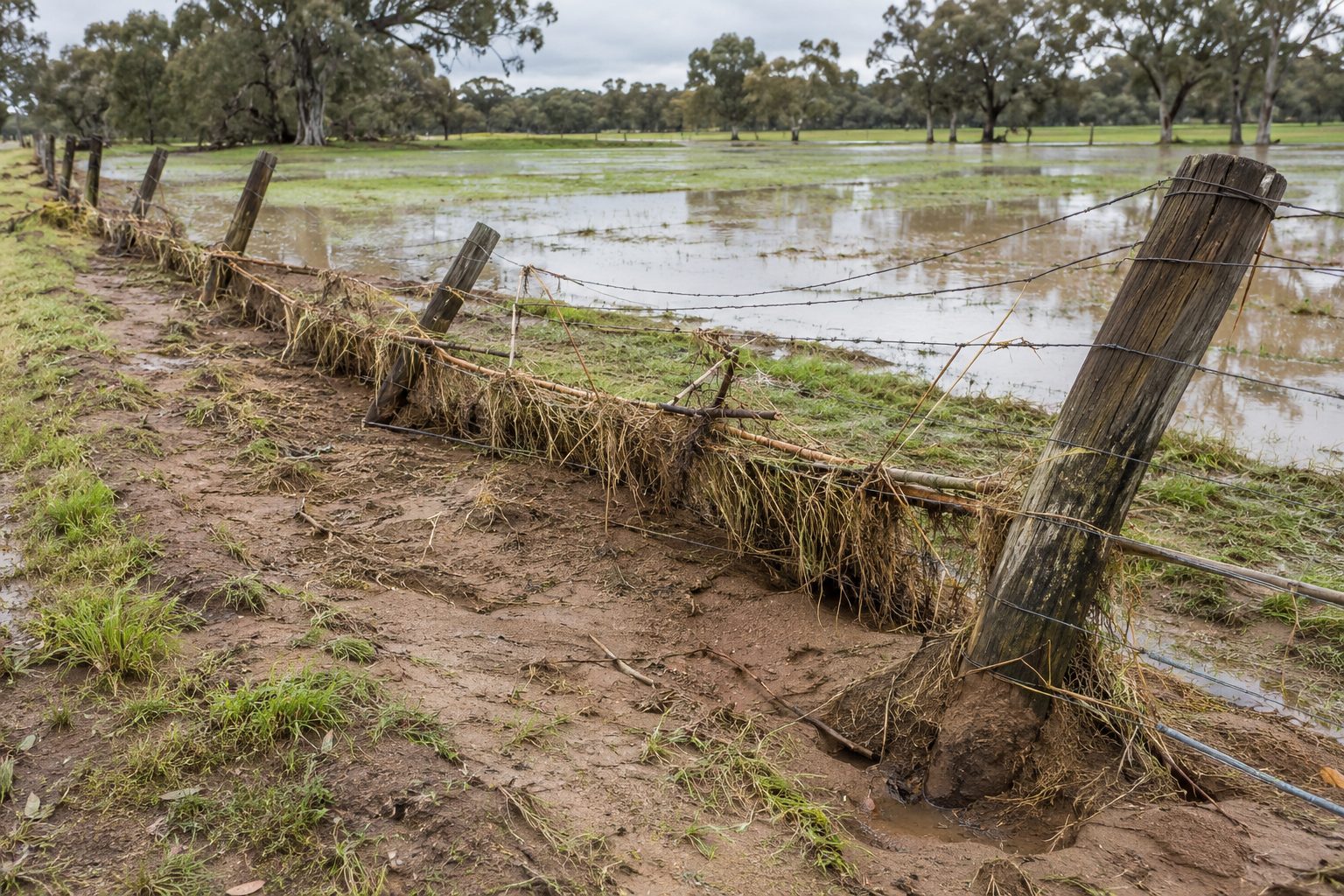
What past programs listed for fences
Earlier programs give a picture of what help has covered, but none is open to the Riverina as far as we found. The table sets them out, unnamed and without amounts.
| Source | What it covers | Where it stands |
|---|---|---|
| Rural Assistance Authority grant guidelines | Listed repairing or replacing fencing and other essential property infrastructure among eligible costs, for earlier storms and floods | Closed. Historic (grant guidelines) |
| Rural Assistance Authority flood grant page | A grant for a later flood event. The page does not say whether fencing was covered or which areas qualified | Closed (flood grant page) |
| Local Land Services fencing project | Fencing in the Western region, not the Riverina | Completed (project page) |
| Regional news item | Reports an earlier Local Land Services fencing and stock management round for the Riverina | Historic, secondary (news item) |
| Regional development news item | Reports an earlier program for boundary fences beside public land after bushfires | Historic, secondary, status unknown (news item) |
Do not read the table as a promise. A closed program tells you what an earlier event produced, not what a future one will. And a news item reports a program as it was announced, not as it was run.
Fire damage and fences beside public land
For fire, the only fence-specific item we found is the news report of an earlier program for boundary fences beside public land after bushfires. We do not name it, and we could not confirm that it is open. If your fence runs beside public land, ask the council, Local Land Services or Crown Lands what applies. Our page on fences beside roads, stock routes and Crown land covers the public land side.
Who pays when a flood or fire damages a fence you share with a neighbour is a separate matter. The sources we read do not settle how the Dividing Fences Act treats it, so see the dividing fences guide and ask a solicitor.
Design that survives floods is a different question
Money spent on a flood-resistant fence design is a separate question from help with costs. Victorian Government guidance for riparian fences in flood-prone areas, an interstate source, says no fence can be designed to withstand a major flood, and suggests ways to make repair easier (the guidance). Our flood and fire damaged fence repair page sets those ideas out. Do not assume that assistance, if any is open, would pay for a stronger design rather than repair.
Who to ask first, and what to keep
Start with the Rural Assistance Authority, which lists the programs and their conditions, and then Local Land Services, which is the agency named on the fencing projects we found. Ask both whether an event has been declared for your area, whether fence costs are on the list and what you must show.
Whatever the answer, keep records. Take dated photos of the damage before any clean-up, note the date and cause, keep every quote and receipt, and write down who did what. Records are what any later application would draw on, and they help with a neighbour or an insurer as well. When the fence needs work, send the town, a photo and a short description and your enquiry will be passed to a local contractor.
What this guide cannot do
This guide cannot tell you whether you qualify for help, whether any program is open or what a program would pay. The programs we found were tied to particular events and have closed or are for other areas, and we do not name or describe them beyond what the pages say.
We are a referral service. Your enquiry is passed to a local contractor, who sets their own terms, and we do not quote, build, sign contracts or apply for assistance on your behalf. Ask the Rural Assistance Authority and Local Land Services what applies to you.
Check the current rules before you rely on this
This page describes how NSW disaster assistance for rural landholders is organised and what some earlier programs listed for fences. It describes the rules in general terms as they stood in November 2026. Standards, forms, thresholds and fines change.
The authoritative sources are Rural Assistance Authority, storm and flood disaster assistance programs, Rural Assistance Authority, Rural Landholder Grant guidelines (a closed program; historic) and Local Land Services, Fencing Biosecure Production Zones and Pest Knockout project (completed; Western region). Where anything here differs from those sources, they are right and we are not.
We are not fencing contractors, builders, regulators or lawyers. For what applies to you, ask the Rural Assistance Authority and Local Land Services whether an event has been declared for your area and whether fence costs are covered.
Accurate at the time of writing, November 2026. Always check the source before relying on it.